04 Jun How serious is the asbestos global waste problem?

How serious is the asbestos global waste problem? (And what are the solutions?)
Could the millions of tonnes of harmful asbestos dumped into landfills each year be put to good use? Are we removing asbestos at a rate that will benefit those potentially exposed to these harmful mineral fibres? What’s in store for our future and are we creating a safer world?
At RS Asbestos, we are licensed leaders in removing, repairing, and remediating asbestos. We are at the forefront of the market, safely removing asbestos from commercial and domestic buildings all over the north. But where does that asbestos go and has asbestos production stopped since its UK ban? Let’s explore.
How much asbestos is still produced globally?
The British Occupational Hygiene Society (BOHS) shared the Europe Asbestos Forum findings that in 2019 alone, “about 200 million tons of asbestos was produced globally.” That doesn’t take into account the production in the last decade or around the world in places like the US which doesn’t report on such findings. Half of the asbestos produced is used in Europe and the other half around the globe. Often, this asbestos material is used for items such as water pipes.
That’s just new asbestos but what about the asbestos that has already been produced and needs to be removed such as in buildings that pre-date the year 2000?
How much asbestos needs to be removed from existing pre-2000s buildings?
The US Geological Survey estimates that between 1920 and 2011, Europe used half of the available asbestos materials, equalling roughly one hundred million tonnes. That is roughly equal to “trucks filled with asbestos bumper to bumper, 2.5 times around the world” (European Asbestos Forum).
The BBC reported that at least “230,000 tonnes of waste containing asbestos” is estimated to go to landfill every year in the UK alone. The government provided a detailed view in 2011 but removal has been accelerated since then. Further, Parliamentarians and campaigners say the BBC, “are urging the removal of asbestos from non-residential buildings within a 40-year timeframe.”
Of course, the problem is far from over with an estimated 1.5 million UK buildings containing asbestos and 8 in 10 UK schools. It translates to 94% of hospitals, 80% of schools, and 74% of universities still contain asbestos that will need to be removed.
Asbestos-related injuries and deaths are the leading cause of occupational death in the UK. The problem is big and only growing. But why is asbestos so dangerous in the first place?

What’s the problem with asbestos?
The problem is that asbestos cannot be destroyed or disposed of like other building materials. Once the fibres become airborne when disturbed or damaged, they can be inhaled, causing serious diseases. It’s a silent killer because it has no discernable look, taste, or smell. The diseases impact people long term as they aren’t instant killers. Once diagnosed, it’s often too late.
Some of the more prevalent diseases associated with asbestos exposure are as follows:
- Mesothelioma: a cancer that impacts the lining of the lungs and lower digestive tract; almost always fatal.
- Asbestos-related lung cancer: looks similar to lung cancer caused by other means such as smoking.
- Asbestosis: serious scarring conditions of the lungs from heavy asbestos exposure, causing shortness of breath, which can be fatal in severe cases.
- Pleural thickening: the lung lining thickens as swells, squeezing the lung itself, causing shortness of breath and chest discomfort.
In 2018, the figures reported by the International Journal for Environmental Research and Public Health in “The Global Asbestos Disaster (2018)” show that 18,036 people had asbestos-related diseases every year in the UK alone; compare that figure with the annual deaths from road accidents: 1,782. That means over 10 times more deaths or illnesses occur from asbestos than road deaths. The Health and Safety Executive (HSE) reports that “around 20 tradesmen die each week as a result of past exposure.”
Although two-thirds of countries around the world have an asbestos ban, the industry keeps growing.
What does removal of asbestos plus the continuation of using asbestos-related materials mean for exposure?
What does ‘fourth-wave’ exposure mean?
Experts such as Arther Frank, a professor of environmental and occupational health at Drexel University in Philadelphia, believe that asbestos exposure can impact the environment as well as exposed people. He considers there are potentially four waves of exposure.
- First wave: people working directly with the product, their families
- Second wave: installers of asbestos-containing products (such as water pipes)
- Third wave: people living in buildings with damaged asbestos
- Fourth wave: environmental exposure around landfills and potentially in the air or water, which hasn’t been explored fully
Of course, the UK has stringent asbestos regulations. But is it enough?
How stringent are UK regulations (compared to the rest of the world)?
Asbestos has been banned in the UK since 1999 and the mineral is recognised as cancer-causing and dangerous. Compared to the rest of the world, the UK has some of the strictest laws.
Luckily for those of us who live in the UK, we have some of the most stringent policies when it comes to asbestos regulations, including how all asbestos-containing materials need to be double-bagged in polyethylene (PE), a polymer plastic which is one of the most commonly produced plastics for packaging. After bagging, the contents need to be placed in a covered and locked skip and safely disposed of in an approved waste facility.
But where does the removed asbestos end up really?
Where does removed asbestos end up?
There are 29 approved landfill sites approved to take asbestos in England and Wales safely. But with the millions of tonnes of waste yet to be removed from pre-2000s buildings, will we run out of safe landfill space? And is landfill a long-term solution?
Graham Gould, Chairman of Thermal Recycling, a company that does asbestos denaturing (more later) notes that it will take at least 25 years to move all of the millions of tonnes of asbestos-containing material from existing pre-2000s buildings to landfill.
He explains, “Asbestos is safer in a hole in the ground than in buildings, but it’s a temporary solution. Once it’s in landfill, it doesn’t degrade or degenerate; it is there forever.” He continues, “Landfill is not a solution. It doesn’t achieve anything except taking it out of buildings.”
Gould explains that despite safe removal, you’re simply removing material from one place and putting it in another.
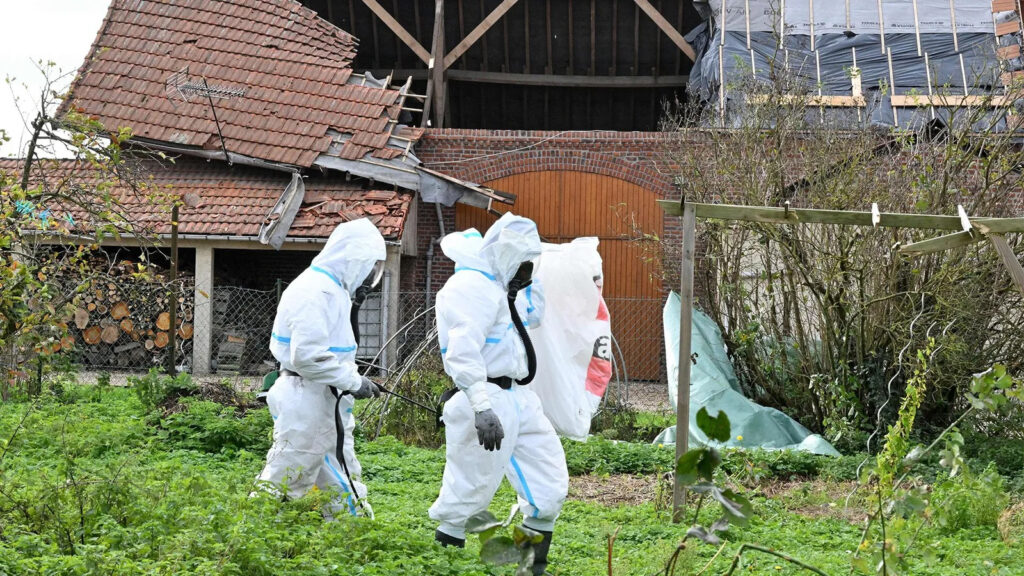
For our purposes at RS Asbestos, we use approved specialists to remove asbestos from buildings and take it to approved sites to mitigate the risks from people who could be potentially exposed to harmful fibres on those sites, but there still may be risks in the future.
We need a better solution after the asbestos waste material is removed! We are creating a problem for future generations; however, some innovators, like Gould, are coming up with solutions, which we will explore.
What are the future solutions to the asbestos problem?
One solution is a process called denaturation of asbestos.
Denaturation destroys the asbestos so that no fibres or minerals are recognisable. It does so by using one of four processes: chemical, thermal, mechanical/kinetic, or biological.
- Chemical denaturation: a process of discharging industrial waste acids with asbestos cement, acid-base reaction where the cement reacts to the acid neutralising the acid and destroying the asbestos. Can be used to eliminate chrysotile (white), amosite (brown) and crocidolite (blue) asbestos. All minerals and fibres are destroyed leaving on safe dust behind.
- Thermal recycling: as it seems, this process uses heat treatment in state-of-the-art kilns, which is currently in the testing phase to maximum efficiency. It can be used currently only for cement-bonded roof sheets of chrysotile asbestos but more materials can be destroyed in future as this process develops.
- Mechanical/kinetic denaturation: this process uses steel balls in a washing-machine-style structure where the material is ground and spun at high speed. Since it’s spun at high speeds, it releases kinetic energy and heat and the fibres are amorphised, which means the fibres turn into harmless dust with no trace of the original asbestos structure intact. This process is the fastest and simplest denaturation process and the remains can be used in the concrete and brick industries as filler but it’s still in the laboratory phase in some places.
- Biological denaturation: a process that uses biological processes such as fungi or lichen on existing sites (soil and roofs). The process is slow and cost-effective but cannot currently be used on landfill where the asbestos-containing materials are wrapped in plastic bags and it’s currently only suitable for use on loose chrysotile fibres.
All of these denaturation processes are exciting developments in the asbestos-removal world. The good news is some companies have already successfully begun to process and denature asbestos waste.
Who are the current key players in denaturing asbestos?
Here are some key players, discussed by the BBC, who are successfully denaturing asbestos.
- Asbester in Rotterdam, the Netherlands: the BBC notes, “Large sheets of asbestos cement are shredded and wettened. Through milling and heating, an alkaline slurry is created, which the company says dissolves the asbestos fibres. The process turns the fibres of this toxic mineral, together with the cement, into a harmless material. This material can then be reused – as calcium silicate hydrate – in concrete mixtures in the construction industry. As more and more asbestos is dumped into landfills and the environment, this undertaking is one of a growing number of potential solutions for a global waste problem.” Calcium silicate hydrates is the material responsible for cement and concrete’s durability and strength. The article continues: “[Inez Postema’s, the founder and director] vision is to build a plant capable of processing 25,000 tonnes a year at first, growing to 75,000 tonnes a year, including drinking water pipes and sheeting.”
- Thermal Recycling in Wolverhampton, UK: the BBC explains: “The technique [Graham Gould’s] company has developed uses the denatured fibres to create a dry and inert product, called Calmag, which is an alternative to cement that can be used in the construction industry, such as paving stones. It can be used in place of traditional cement, which accounts for 5-8% of the world’s annual human-caused carbon dioxide emissions.”
- Inertam, south of France: the BBC describes that the company “uses technology to heat the asbestos to a very high temperature, turning it into a glass-like substance. The plant has authorisation to process 8,000 tonnes a year but the process is expensive.”
As those asbestos-removal deadlines approach, RS Asbestos thinks more players will come into the market, creating a safer and more hopeful future for us all.
The key message
Our buildings, water pipes, and other infrastructure around the world contain asbestos that soon needs to be removed. Burying it delays the issue, leaving it to the future to come up with viable solutions. But that future is at hand.
The current problem with denaturation is that it’s currently small-scale and expensive. But at RS Asbestos we look forward to the future. We will still continue our mission of safe asbestos removal, following all current UK regulations, but we plan to keep abreast of any industry changes, with the hopes that denaturing processes become a long-term solution to the problem.
If you’d like to read more in-depth, have a look at this recent BBC article, “Asbestos is a global waste problem – here’s how we might get rid of it” by Katherine Quarmby here.
We all want a safer, more permanent solution to the asbestos problem. The first step is safe removal practices, the second step is denaturing asbestos into usable materials (once that optician is widespread and affordable), and the third step is yet to be considered. What do you think the future of asbestos safety entails?
In the meantime, RS Asbestos is here for all of your safe asbestos removal needs.