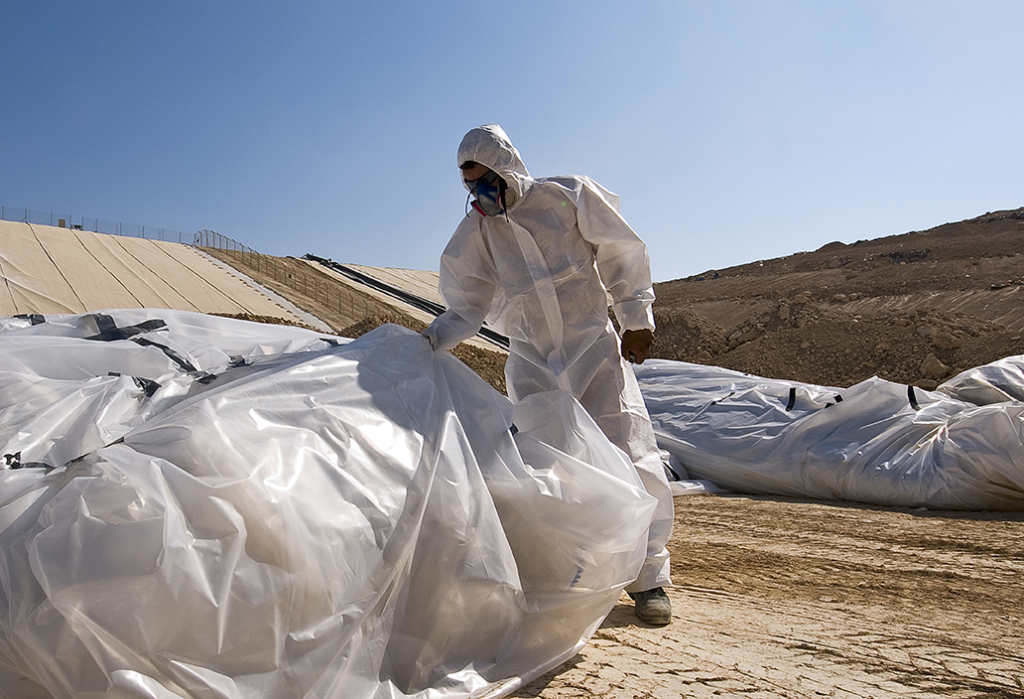
Asbestos was widely used in the construction of school buildings in the UK until the 1990s. However, it has since been found that asbestos poses serious health risks, especially when it is disturbed and the fibres become airborne. As a result, it is crucial that schools take steps to identify and remove any asbestos-containing materials in their buildings. At RS Asbestos, we understand the unique challenges of working in the education sector and the need for minimal disruption to the learning environment.
We offer a full range of asbestos removal services tailored specifically to the needs of schools, including site surveys, testing, and safe removal and disposal. Our experienced and fully trained team uses state-of-the-art equipment and adheres to strict health and safety protocols to ensure a safe and effective removal process. With our commitment to quality and attention to detail, you can trust us to provide a safe learning environment for your students and staff.

Removal Work
Asbestos was widely used in the construction of school buildings in the UK until the 1990s. However, it has since been found that asbestos poses serious health risks, especially when it is disturbed and the fibres become airborne. As a result, it is crucial that schools take steps to identify and remove any asbestos-containing materials in their buildings. At RS Asbestos, we understand the unique challenges of working in the education sector and the need for minimal disruption to the learning environment.
We offer a full range of asbestos removal services tailored specifically to the needs of schools, including site surveys, testing, and safe removal and disposal. Our experienced and fully trained team uses state-of-the-art equipment and adheres to strict health and safety protocols to ensure a safe and effective removal process. With our commitment to quality and attention to detail, you can trust us to provide a safe learning environment for your students and staff.

General
Asbestos management in schools is a crucial issue, as asbestos is present in over 75% of Britain’s schools. Asbestos was used extensively in building materials in the past due to its exceptional properties, such as its strength, insulation capabilities, and resistance to fire and chemicals. However, it was eventually discovered that exposure to asbestos fibres can cause serious health problems, including cancer and non-cancerous effects. As a result, asbestos has been banned in many countries, including the UK, where it was prohibited in November 1999. Despite the ban, asbestos is still present in many older schools that were built during the period when its use was at its height, from 1945 to 1975. During this time, over 14,000 schools were constructed in the UK, and it is likely that many of these schools contain asbestos-containing materials.
Asbestos was used in a variety of building materials, including ceiling and wall tiles, insulation, and roofing materials, and it is often found in these types of materials in schools. Asbestos-containing materials that are in good condition and not disturbed may not pose a significant risk. However, if the materials are damaged or disturbed, they can release asbestos fibres into the air, which can be inhaled and potentially cause health problems. It is essential for schools to have their buildings inspected for the presence of asbestos and to take steps to manage and remove asbestos-containing materials in a safe and effective manner. This can help protect the health of students and staff and ensure that schools are safe and healthy environments for learning and working.
General
Asbestos management in schools is a crucial issue, as asbestos is present in over 75% of Britain’s schools. Asbestos was used extensively in building materials in the past due to its exceptional properties, such as its strength, insulation capabilities, and resistance to fire and chemicals. However, it was eventually discovered that exposure to asbestos fibres can cause serious health problems, including cancer and non-cancerous effects. As a result, asbestos has been banned in many countries, including the UK, where it was prohibited in November 1999. Despite the ban, asbestos is still present in many older schools that were built during the period when its use was at its height, from 1945 to 1975. During this time, over 14,000 schools were constructed in the UK, and it is likely that many of these schools contain asbestos-containing materials.
Asbestos was used in a variety of building materials, including ceiling and wall tiles, insulation, and roofing materials, and it is often found in these types of materials in schools. Asbestos-containing materials that are in good condition and not disturbed may not pose a significant risk. However, if the materials are damaged or disturbed, they can release asbestos fibres into the air, which can be inhaled and potentially cause health problems. It is essential for schools to have their buildings inspected for the presence of asbestos and to take steps to manage and remove asbestos-containing materials in a safe and effective manner. This can help protect the health of students and staff and ensure that schools are safe and healthy environments for learning and working.
Duty Holder Info
In the UK, the duty holder for asbestos management in schools is typically the person or organization responsible for maintaining the school building. The duty holder has a legal obligation to manage asbestos in the school, which includes identifying the location and condition of any asbestos-containing materials, assessing the risk of exposure, and implementing measures to control the risk of exposure. The duty holder must also have an asbestos management plan in place and ensure that it is regularly reviewed and updated.
The duty holder is required to consult with employees and any other relevant parties, such as parents or contractors, about asbestos management in the school. They must also provide information and training to employees who may be at risk of exposure to asbestos, and ensure that appropriate precautions are taken when work is being carried out that could disturb asbestos-containing materials.
In addition, the duty holder must notify the local authorities if asbestos-containing materials are present in the school and must report any incidents involving the release of asbestos fibers. They must also keep records of any asbestos-related activity in the school, including inspections, risk assessments, and repairs.
Overall, the duty holder has a legal responsibility to ensure that the school is a safe and healthy environment for students and staff, and that appropriate measures are taken to manage the risk of exposure to asbestos.

Duty Holder Info
In the UK, the duty holder for asbestos management in schools is typically the person or organization responsible for maintaining the school building. The duty holder has a legal obligation to manage asbestos in the school, which includes identifying the location and condition of any asbestos-containing materials, assessing the risk of exposure, and implementing measures to control the risk of exposure. The duty holder must also have an asbestos management plan in place and ensure that it is regularly reviewed and updated.
The duty holder is required to consult with employees and any other relevant parties, such as parents or contractors, about asbestos management in the school. They must also provide information and training to employees who may be at risk of exposure to asbestos, and ensure that appropriate precautions are taken when work is being carried out that could disturb asbestos-containing materials.
In addition, the duty holder must notify the local authorities if asbestos-containing materials are present in the school and must report any incidents involving the release of asbestos fibers. They must also keep records of any asbestos-related activity in the school, including inspections, risk assessments, and repairs.
Overall, the duty holder has a legal responsibility to ensure that the school is a safe and healthy environment for students and staff, and that appropriate measures are taken to manage the risk of exposure to asbestos.
Challenges Associated with Asbestos Management in Schools
Managing asbestos in schools presents a number of challenges. According to current Health and Safety Executive (HSE) guidelines, it is generally recommended to manage asbestos rather than remove it, as long as the asbestos is in good condition and not likely to be disturbed. This means that most asbestos will remain in schools and will need to be managed for the foreseeable future. While some schools have effective systems in place for managing asbestos, many do not. Some schools may have an asbestos register, but it may not be kept up to date or accurately maintained.
Additionally, key people in schools may not know where the register is kept, and contractors may not be shown the register before starting work. In addition, many schools do not provide asbestos awareness training for staff, do not have effective asbestos management plans, do not have clear lines of responsibility, and have poor survey information.
https://creativegraphicsuk.com
bespoke services
bespoke services
bespoke services
bespoke services
bespoke services